Categories
Anti-Black racism OPS

Two Ottawa companies support systemic white supremacy and anti-Black racism…by working with a Black owned company

Normally, when we claim white-led companies are supporting systemic white supremacy and anti-Black racism it’s because they’re not hiring or partnering with Black companies even though those Black companies are highly competent. However, another way companies support systemic anti-Black racism is by hiring incompetent Black firms, apparently with the goal of having them fail.

A growing body of evidence indicates this is what two Ottawa companies may have apparently done.

On May 30, the Ottawa Police Services Board gave the Ottawa office of global executive search company Odgers Berndtson the green light to award Black-led Hefid Solutions a $76,500 contract to assist with the design and implementation of the community engagement process for recruiting Ottawa’s new police chief. The Board did this despite community groups publicly exposing weeks earlier that Crime Prevention Ottawa (CPO) had awarded a $50,000 contract to Hefid for the development of a new street violence and gun violence strategy in Ottawa despite Hefid having no apparent experience in street violence. 

The Board also did this despite having been previously informed of several things on Hefid’s website which raise questions about Hefid’s competence and credibility, including:

  • The website has no information on who owns or works for, or with, Hefid.
  • It says, “Founded in 2008, Hefid corporation has grown to become trusted (sic) management consultancy with millions of assets under management.”
  • It says “220+ happy clients from largest corporations” (sic).
  • Under Values on the About Us page, it lists Transparency as a key value stating, “There is nothing frustrating than trying to cover up something when it should not be so. Hefid Solution prides itself as ridiculously transparent. We are an open book. This has ensured the public trust us and our clients adore us.” (sic)
  • The website had quotes (since deleted) endorsing Hefid, and at least one Hefid staff member, that appeared to be fake as they appear on multiple websites. 
  • The site plagiarizes an entire 2017 CEO Magazine article, Teams are a reflection of the leader, posting it as a 2019 Hefid blog post
  • There are no details on any specific projects Hefid has done related to either street violence or community engagement.

Furthermore, a leaked presentation Hefid did for CPO identifies the African Canadian Association of Ottawa (ACAO) as the sole “community partner” on the street violence project and six of the eight individuals listed as members of the “Engagement Team” are either current or former ACAO executives, directors or members. This is particularly concerning as, after being asked several times who owns Hefid, CPO executive director Nancy Worsfold finally admitted that ACAO founder and executive member Hector Addison owns it – which makes the central role of ACAO in the proposed street violence strategy a direct conflict of interest. All six members of Hefid’s engagement team for the chief recruitment project are ACAO members – with five being directors or officers.

Finally, Hefid owner Hector Addison is a long time member of the Ottawa Police Service Community Equity Council (CEC) which the OPS funds and acting Ottawa Police Service chief Steve Bell co-chairs. 

The Board hired Odgers Berndtson Ottawa to run the police chief recruitment and Odgers recommended hiring Hefid to run the community engagement. Odgers has, therefore, hired the same person who is a member of the group created, run and funded by the OPS, and chaired by acting chief Bell, to run the community consultations to hire the new chief. There could be no clearer conflict of interest.

Hefid’s presentation to CPO indicates they’re partnering with CTLabs on the street violence project. CTLabs is part of Lansdowne Technologies that lists the Ottawa Police Service as one of its clients.

Why would Odgers Berndtson Ottawa and CTLabs, both highly respected, highly competent firms, hire and partner with a firm with such clearly questionable competence? This could not have been a mistake. We wrote to both companies for an explanation and neither replied. We must, therefore, assume they hired Hefid with the intent for Hefid to fail and to maintain the status quo of systemic white supremacy and anti-Black racism.

If this is the case, it would be very similar to what we have argued Steve Bell has been doing for years with the CEC which Bell has co-chaired since its creation in 2018. 

The stated goal of the CEC is, “To improve relationships between Indigenous, racialized and faith-based communities and the Ottawa Police Service.” However, according to the April 2022 report, Troubling Encounters: Ottawa Residents’ Experience of Policing, the CEC has helped do exactly the opposite as the report shows that racialized and low income Ottawa residents have extremely low levels of trust in the Ottawa police. In fact, the report states, “In short, for many people in this city, police do not contribute to individual or community safety, in fact, they appear to do the very opposite.” This is directly related to the CEC having no measurable success criteria as confirmed by former CEC vice-chair, Gerard Etienne who, in summer 2021, replied to the 613-819 Black Hub’s request for the CEC’s success criteria by saying, “It has yet to be defined.” Bell has, and continues to, enable the CEC’s ineffectiveness and, by doing so, continues supporting systemic white supremacy and anti-Black racism.

Any community engagement to recruit the new chief or street violence strategy led by Hefid will have no credibility with the community. But that doesn’t seem to matter as the aim clearly appears to be to crown Steve Bell as Ottawa’s new police chief and create a street violence strategy that does nothing to reduce street violence – and Odgers Berndtson Ottawa and CTLabs appear to be fully on board for both.
Categories
Cancel culture Corporations

Want to find the real bad guys? Stop looking at Russia and look at your credit card statement.

The non-stop simplistic “good vs evil ” coverage of the war in Ukraine has continued with some people, including Canada’s former foreign affairs minister Peter McKay, calling Vladimir Putin a psychopath and almost all media outlets framing the U.S. and its allies as the all round good guys. The media continues to ignore the role of multinational corporations in the events leading up to the war in Ukraine, some of which I covered in my post The U.S. has treated Ukraine – and Putin – kinda like it treats Black people.

This is a real change from 2003 when the movie The Corporation examined the behaviour of American corporations and found that they were the ones behaving like psychopaths. The film provided a definition from psychology’s Bible, the Diagnostic and Statistical Manual of Mental Illness. The DSM-IV (it’s now on the 5th edition) said the symptoms of psychopathy included: callous disregard for the feelings of other people, incapacity to maintain human relationships, reckless disregard for the safety of others, deceitfulness, incapacity to experience guilt, and the failure to conform to social norms and respect the law. The film explained that, due to an 1886 U.S. Supreme Court case, U.S. corporations were legally considered “persons” having the same rights as human beings. The film then examined corporate behaviour and showed that, if the corporations were actually people, they’d meet the definition of psychopaths.

Whether or not some, or many, multinational corporations are acting like full fledged psychos today, what is clear is that many are acting in ways that lead to people being harmed and killed – and that the mainstream media spends very little time covering it.

For example, as I said in one of my previous posts, the war in Ukraine was partly caused by the 2014, U.S.-backed removal of Ukraine’s democratically elected president, Viktor Yanukovych following his rejection of U.S. attempts to open Ukraine markets to giant multinational companies and his restarting negotiations with Russia. The negotiations included the International Monetary Fund pushing Ukraine to implement reforms that were friendly to corporations but very unfriendly to the Ukraine people, including cutting wage controls (i.e., lowering wages), reforming and reducing health and education sectors…and cutting natural gas subsidies to Ukrainian citizens that made energy affordable to the general public. (Bryce Green outlined this in his article What You Should Really Know About Ukraine.)

Corporations were also barely, if ever, mentioned by the protesters, governments or media during the wave of anti COVID measures protests that swept across Canada in February 2022. Despite declaring the protests were about “freedom”, the protesters focused their critique – and anger – exclusively on governments, mentioning almost nothing about the role corporations played in exacerbating the effects of the pandemic on many of the most vulnerable workers. They didn’t critique the companies caught red handed giving the pandemic money they got from the government out to their shareholders like long term care home giant Extendicare. They didn’t critique Amazon for imposing on the “freedom” (and right) of its workers to safe working conditions by firing employees who spoke up about unsafe conditions. (The mainstream media did cover one major story that grew out of this: the successful formation of Amazon’s first union at its Staten Island warehouse by former Amazon worker Christian Smalls.)

The convoy protesters also said nothing about the big Canadian banks.

However, unlike the protesters and the mainstream media, the Government of Canada addressed corporations, including the big banks, directly in its recently released 2022 Budget. The government took some of the strongest action in recent years to make corporations – including Big Tech – pay their fair share of taxes by taxing excess pandemic profits, increasing the corporate tax rate (although only on banking and life insurance companies) and closing several corporate tax loop holes. This is probably partly because the deal between the governing Liberals, who have a minority, and the New Democratic Party, included tax measures, but they’re good steps whatever the reason.

The government went after the big Canadian banks in particular because it said the banks’ made huge pandemic profits partly because of measures the government took that benefited the banks. Budget 2022 said, “While many sectors continue to recover, Canada’s major financial institutions made significant profits during the pandemic and have recovered faster than other parts of our economy—in part due to the federal pandemic supports for people and businesses that helped de-risk the balance sheets of some of Canada’s largest financial institutions.” The government also wanted to curb outright tax avoidance by the banks. On that, Budget 2022 “proposes to examine potential changes to the financial transaction approval process to limit the ability of federally regulated financial institutions to use corporate structures in tax havens to engage in aggressive tax avoidance.”

In my post It’s time to cancel Cancel Culture, I pointed out that the ones actually doing the cancelling are the big media corporations that cancel people’s shows or their hosting opportunities – not people calling out celebrities on Twitter. But it’s the corporations’ bad behaviour that needs to be called out and cancelled, and it’s good to see the Canadian government taking strong first steps to cancel corporations’ ability to avoid paying their taxes.

The other bad corporate behaviour is using things like the war in Ukraine and the pandemic to raise prices more than actually needed. Do you notice that all the media stories about prices are framed like prices just go up on their own – and don’t say who’s actually raising them? This line from an April 20, 2022 CTV story is typical, “With Canada’s annual inflation at its highest point in over 30 years, experts say Canadians can anticipate their cost of living to increase significantly, warning that prices will likely not decrease for some time.”

Canadians need to ask companies to justify their price increases. And workers need to follow the lead of Ontario carpenters and strike if their employers aren’t willing to raise wages to meet the high cost of living. On Monday, May 9, CityNews reported that 15,000 workers went on strike at 12:01 a.m after they overwhelmingly rejected the latest offer from their employers in the industrial, commercial and institutional (ICI) sector.

Power to the people.

Categories
3rdNBCS Budget 2022

Federal Budget 2022 takes steps forward, backward and sideways for Black Canadians

The federal government says the 2022 budget it tabled April 7 builds on the things it already announced for Black Canadians, including:  

  • $100 million in 2021-22 for the Supporting Black Canadian Communities Initiative for Black-led and Black-focused community organizations;
  • $200 million for the creation of a Black Endowment Fund to provide steady and reliable funding for Black charities;
  • Over $19 million for culturally specific approaches to mental health for Black communities in Canada; and
  • Up to $265 million over four years for the Black Entrepreneurship Loan Fund, in partnership Black-led business organizations and financial institutions.

New funding in Budget 2022 includes: 

  • $50 million over two years, starting in 2022-23 for the Supporting Black Canadian Communities Initiative to continue empowering Black-led and Black-serving community organizations and the work they do to promote inclusiveness;
  • $1.5 million in 2022-23 for a federal contribution towards an endowment which would support the ongoing activities of the Jean Augustine Chair in Education, Community and Diaspora. The Jean Augustine Chair housed at York University, is focused on addressing the systemic barriers and racial inequalities in the Canadian education system to improve educational outcomes for Black students;
  • $3.7 million over four years, starting in 2022-23 for Black-led engagement, design, and implementation of a Mental Health Fund for Black federal public servants; and
  • $40.9 million over five years, starting in 2022-23, and $9.7 million ongoing to the federal granting councils to support targeted scholarships and fellowships for promising Black student researchers. 

Some of this sounds great and are certainly steps in the right direction. Others, like just $50 million over two years for the Supporting Black Canadian Communities Initiative, sound woefully inadequate. However, really knowing what’s enough will take detailed analysis, including talking to lots of Black folks to find out if the programs are having the intended impact (which would be great projects for some of those student researchers to work on with professionals).

What’s easier to see is what wasn’t included at all.

One of the biggest omissions is no money to specifically collect data on the disproportionate impact of the COVID-19 pandemic on Black Canadians. The government’s Budget 2021 had $172 million over five years to “enhance our ability to collect disaggregated data, especially on diverse populations, to bring more equity, fairness, and inclusion into federal government decision making”. But without specifically allotting some of this money to study the pandemic impact on Black Canadians it’s likely none will be.

Another big omission in Budget 2022 is connected to the merging of Canada’s anti-racism and anti-hate initiatives. Budget 2022 has $85 million over four years, starting in 2022-23, to support the work underway to launch a new Anti-Racism Strategy and National Action Plan on Combatting Hate. The Budget says the funds, “will support community projects that ensure that Black and racialized Canadians, and religious minorities have access to resources that support their full participation in the Canadian economy, while also raising awareness of issues related to racism and hate in Canada.” The problem is this groups systemic discrimination, including systemic anti-Black racism, with “hate”, when the two are fundamentally different. Systemic discrimination, like that faced by Black and Indigenous people in Canada, refers to discrimination by state bodies – like the police, schools and the health care system – and private institutions – like banks and employers – resulting in disproportionate numbers of Black and Indigenous people being jailed, unemployed or underemployed. It also leads to disproportionate numbers of Black and Indigenous students being suspended, expelled and streamed into non-academic courses and worse health outcomes for Black and Indigenous people. So, although a recently released Statistics Canada hate crimes report shows Black Canadians faced the most hate crimes of any group in Canada in 2020, systemic anti-Black racism is the far worse and fundamental problem. Budget 2022, includes $1.2 million to support the Special Envoy on Preserving Holocaust Remembrance and Combatting Antisemitism and $1.2 million to support the new Special Representative on Combatting Islamophobia. The government should create a similar Special Envoy on Systemic Anti-Black Racism.

Other notable omissions from Budget 2022 are no mention of specific funding for Black Canadians in either Chapter 1 – Making Housing More Affordable or Chapter 4 – Creating Good Middle Class jobs. Regarding housing, on Feb.18, 2022, the federal government announced $10 million for a pilot project to help 200 Black families in the Greater Toronto Area (GTA) purchase a first home. However, the project is a partnership with the Black North Initiative and Canada’s Big 5 banks – both of which have been recently critiqued regarding doing things for Black folks. A July 2021 Globe and Mail article revealed most companies had made little progress on diversity a year after signing the BNI pledge to take action. This followed articles by El Jones and Desmond Cole in May 2021 reporting how BNI was benefitting from anti-Blackness partly by accepting a $1 million donation from one of its board members, Prem Watsa, who is the largest investor in the racist U.S. for-profit bail system. 

The big Canadian banks’ involvement in the program is also suspect given an April 6 Globe and Mail article reported how “Canada’s big six banks almost came together to help Black entrepreneurs – but then they went their separate ways.” The article explains how the banks were originally supposed to take part in the Black Entrepreneurship Loan Fund program but pulled out at the last minute after the government refused to guarantee the loans. It would be easier to give the banks the benefit of the doubt for why they walked away – if every one of the Big Five hadn’t refused to tell the Globe and Mail reporter why. Budget 2022 has measures to get the banks to pay back some of the billions they made during the pandemic, in part due to the federal pandemic support for people and businesses that helped de-risk their balance sheets. The government should use its powers to give the banks the incentive to support the Black Entrepreneurship Loan Fund without loan guarantees – or with less favourable ones than the banks are used to – and treat Black folks equitably by giving more Black people personal and business loans.

But giving Black businesses loans only helps if they have business and the Budget was silent on something that Black communities have been requesting for years that would address this: setting aside a percentage of federal government contracts for Black businesses as the government has been doing for years for Indigenous businesses. There was yet again no mention of this.

Although Budget 2022 included $60 million in 2023-24 to increase the federal contribution to criminal legal aid services it was silent on two key justice-related issues: expunging the convictions of the many Black folks found guilty of minor cannabis offences before cannabis was made legal and removing mandatory minimum sentences on drug offences, as called for by Jonathan Rudin, program director at the Toronto-based Aboriginal Legal Services. Rudin says the funding fails to address the root problems inherent in the justice system.

Given one of the impacts of systemic anti-Black racism is high unemployment, and that the legal cannabis industry is now dominated by white male owners, the government should also provide funding and support to help Black Canadians get into the cannabis industry.

Understandably (and happily), some Black groups aren’t waiting for government funding to start the work to comprehensively analyse if the Budget 2022 funding is adequate. For example, the leaders of the Black Class Action suit against the Government of Canada released a statement on the proposed $3.7 million Mental Health Fund for Black federal public servants saying that, “while this represents a step in the right direction, the measure is lacking in resources and details…$925,000 per year is wholly insufficient to design and implement a national mental health program. Secondly, a four-year period to design and implement the program is too long. Workers need help right now and cannot put their mental health issues on hold. We are calling on the government to provide more financial resources for this plan and to implement it quickly. The pandemic & global conflict have shown us the government can move quickly when they see a crisis. This budget is carefully worded to delay any serious & urgent implementation of a response to the mental health crisis facing Black workers in the public service.” They call on Minister of Finance Chrystia Freeland to request more funding for the program and to implement it within the next 12 months.

The Budget also includes some things that will benefit middle and lower income Canadians – including the many Black Canadians who are disproportionately lower income. This includes $5.3 billion over five years, starting in 2022-23, and $1.7 billion ongoing to provide dental care for Canadians. The program would be fully implemented by 2025 and restricted to families with an income of less than $90,000 annually. The Budget also commits to continue the ongoing work towards a universal national pharmacare program including tabling a Canada Pharmacare bill and working to have it passed by the end of 2023. The NDP demanded both these measures as part of its supply and confidence deal with the government, proving once again that minority governments are best for Black folks.

Finally, the government is taking concrete action to make corporations – including Big Tech – pay their fair share of taxes by increasing the corporate tax rate (although only on banking and life insurance companies) and closing several corporate tax loop holes.

Black groups across the country need to do more analysis like the Black Class Action folks did – and share it – and the 3rd National Black Canadians Summit, July 29-31 in Halifax would be a great place to do so.

Categories
Neo-colonialism Russia U.S.

The U.S. has treated Ukraine – and Putin – kinda like it treats Black people

I’ve learned to always be skeptical of stories that are too black and white – especially ones with good guys and bad guys – told by the “good guys”. As I suspected that the Ukraine/Russia story we’re getting from most mainstream media is such a story, I asked my African history teacher if he could point me to some sources that could give me a broader perspective on the conflict. He pointed me to Black Agenda Report which provides “news, commentary and analysis from the black left” where I quickly found what I was looking for: Bryce Greene’s article What You Should Really Know About Ukraine.

The article started by describing the official line being parroted by most mainstream media: “Russia is challenging NATO and the “international rules-based [and democratic] order” by threatening to invade Ukraine, and the Biden administration needed to deter Russia by providing more security guarantees to [Ukraine]. The official account seizes on Russia’s 2014 annexation of Ukraine’s Crimean peninsula as a starting point for US/Russian relations, and as evidence of Putin’s goals of rebuilding Russia’s long-lost empire.” Greene then provides the all important context, including U.S. involvement in the 2014 coup that toppled Ukraine’s democratically president Viktor Yanukovych, involvement that would have had to have the approval of U.S. president Barack Obama.

Greene explains U.S. efforts, prior to the coup, “to open Ukrainian markets to foreign investors and give control of its economy to giant multinational corporations.” The main tool for this was the International Monetary Fund, which loans countries money in exchange for them adopting policies friendly to foreign investors. “The IMF is funded by and represents Western financial capital and governments and has been at the forefront of efforts to reshape economies around the world for decades, often with disastrous results. The civil war in Yemen and the coup in Bolivia both followed a rejection of IMF terms”, Greene writes. In Ukraine, the IMF had long planned to implement a series of economic reforms  to make the country more attractive to investors. “These included cutting wage controls (i.e., lowering wages), “reform[ing] and reduc[ing]” health and education sectors…and cutting natural gas subsidies to Ukrainian citizens that made energy affordable to the general public. In 2013, after early steps to integrate with the West, Ukrainian President Viktor Yanukovych turned against these changes and ended trade integration talks with the European Union. Months before his overthrow, he restarted economic negotiations with Russia, in a major snub to the Western economic sphere.”

Greene details how, after Yanukovych started talking with the Russians, the U.S. supported his opponents, including far-right and openly Nazi groups, and fueled anti-government sentiment that led to the coup which removed him. Greene then explains why Putin annexed Ukraine’s Crimean peninsula.

From Russia’s point of view, the 2014 coup meant a longtime adversary had successfully overthrown a neighboring government using violent far-right extremists – and those extremists now controlled Crimea. Greene explained that, “the Crimean peninsula, which was part of Russia until it was transferred to the Ukrainian Soviet Republic in 1954, is home to one of two Russian naval bases with access to the Black and Mediterranean seas, one of history’s most important maritime theaters. A Crimea controlled by a US-backed Ukrainian government was a major threat to Russian naval access.” So Putin took over Crimea but hadn’t advanced any further – until now.

Greene argues that the change was due to the U.S.’s continued efforts to get Ukraine to join the North American Treaty Organization (NATO), “an explicitly anti-Russian military alliance”. Greene poses the question, “Imagine for one second how the US would behave if Putin began trying to add a US neighbor [like Mexico for example] to a hostile military alliance after helping to overthrow its government…” The answer is clear.

What is also clear are the parallels between the U.S. treatment of Putin and how various levels of the U.S. state have historically treated Black people in U.S. and Africa.

The U.S. has been involved in coups that led to the removal of African leaders that chose polices favoring their countries’ people over Western interests. This included Ghana’s democratically elected president Kwame Nkrumah, and Burkina Faso’s Thomas Sankara and the Democratic Republic of the Congo’s Patrice Lumumba. The U.S. and Canada were also involved in the removal of Haiti’s democratically elected president, Jean-Bertrand Aristide.

As the full context shows Putin defending against American economic and military aggression, the U.S. labelling him as the aggressor is an example of the U.S. government using a central technique of systemic anti-Black racism (although, in this case, against a white guy): labelling Black people who defend themselves from systemic discrimination by calling it out, as aggressive. The label is almost always accompanied by half truths about all bad things the accused Black people have done. The subtext of these claims is that the Black folks are the bad guys and the people whose discriminatory behaviour they’re calling out are the good guys.

The U.S. is doing the same thing by labelling Putin as the aggressor who wants to expand his “dictatorial” control while portraying itself as protectors of democracy.

The reality is that the only place Putin took over since coming to power is Crimea. However, while Putin has been in power, U.S.-initiated attacks have included Afghanistan, Iraq and Libya. As for the U.S. – nothing is more anti-democratic than helping overthrow democratically elected leaders which the U.S. has a long history of doing.

The U.S. also has a long history of using black and white narratives to label itself the angel of democracy defending the world against the world’s devilish strong men. From Saddam Hussein to former Libyan leader Muammar Gaddafi to Putin, the U.S. has used the narrative to obscure its own role, driven by its expansionist economic interests, in helping create and empower such men. (In Gaddafi’s case, the narrative leaves out the truth about how he improved the lives of many Libyans by nationalizing the oil industry and using the increasing state revenues to implement social programs emphasizing house-building, healthcare and education projects.)

It’s important to understand the full complexity of history to inform our actions today. As the U.S. is, as Barack Obama said in his November 2020 book A Promised Land, the only remaining superpower, it’s particularly important to understand what it’s doing in general – and to Black people in particular – now…and what it might do in the future.

Note: Obama mentioned nothing about the 2014 removal of Ukraine’s democratically elected president Viktor Yanukovych in his book A Promised Land even though Obama met with Arseniy Yatsenyu – who the U.S. were caught on tape choosing to replace Yanukovych – less than two weeks after Yatsenyu became Ukraine’s prime minister.

Categories
COVID Demos Police

Police response to “freedom convoy” is the strongest argument ever for abolishing the police

As I watched people attack the U.S. Capitol last January 6, I, like many Canadians, asked myself: could anything like that happen here? Well, this past week, we got our answer when we watched thousands of anti-vaccine mandate demonstrators occupy downtown Ottawa for a week – while the Ottawa police did almost nothing to stop them. And this was despite the fact that Ottawa police Chief Sloly eventually had to admit that the protest was, “intolerable [and] unprecedented.”, and that, “The range of illegal, dangerous and unacceptable activities is beyond the ability to list.” 

And, just as people around the world remarked at how American police treated the capital attackers very different from Black Lives Matter protesters, we saw how Ottawa police treated the truckers very differently from the young Black and Indigenous protesters who blocked an Ottawa intersection in November 2020, following the acquittal of OPS constable Daniel Montsion in the death of Abrirahman Abdi. 

But, unlike many people, Black people I know weren’t surprised at the OPS response. On the contrary, we saw the OPS acting exactly as expected. That’s because the OPS, like all police forces in Canada, has always had one mandate: protect the powerful – or at least don’t get in their way. And the thousands of mostly white convoy protesters, and the organizers with their millions in the bank, were the powerful. The young Black and Indigenous protesters who blocked the Ottawa intersection in November 2020 weren’t.

So, despite knowing that the young protesters had a meeting arranged with city councillors and Ottawa Police Service Board members at noon Saturday, that would end the protest, the Ottawa police moved in around 3am Saturday morning and forcibly removed the protesters, arresting and charging 12 of them. 

Those charges hung over their heads for a year. 

When asked why the OPS appeared to handle the two events very differently, Chief Sloly said the two situations were different, and that he didn’t see a connection with the scale, size and nature of what police faced with the convoy protest. So, the Chief was basically saying, “You can’t compare the two events because the convoy protest was way bigger.” However, saying the convoy was bigger is a comparison so the Chief contradicted himself in the same sentence. But, more importantly, we can compare and what we’re all seeing is that the double standard couldn’t be more blatant. Clearly, the OPS believes some people have more right to protest than others.

All the OPS could have really said about the Nov. 2020 demonstration is that it posed multiple potential safety issues because no one actually said that demo made them feel unsafe. However, there were many reports of people saying the convoy demo made them feel unsafe or actually unsafe.

The convoy blocked Joline Mallet’s 4-yr-old son Liam from getting to his brain cancer treatments. Downtown residents’ homes were vandalized for having Pride flags. Journalists, unhoused people and small business owners were harassed by protesters, some of whom carried confederate flags. Protesters parked, danced and urinated on the War Memorial and kept residents up by blowing their horns well into the night. And the convoy caused businesses in the downtown core, vaccination clinics and an elementary school to close. The Ottawa Coalition to End Violence Against Women said members of the protest were overtly threatening and intimidating women, people from marginalized communities, and those working in precarious low-paid employment. They said they heard accounts of young women being followed, almost run over, and threatened with rape.

When challenged about the poor police response, the OPS said they considered it a success because there were no riots, injuries, or deaths. This bears repeating: their measure of success wasn’t whether women got harassed, or unhoused people got beat up or whether people were too afraid to leave their house to go to work. As long as there were no riots it was all good.

In defence of the police, Diane Deans, who both chairs the police Board and is running for Mayor, said we must trust in the police service and their “greater experience with risk and threat assessments and that they make decisions based on the information they have in the moment, with public safety clearly in the centre.” Simply avoiding riots isn’t centreing public safety.

The OPS response to the convoy backs up calls to defund and eventually abolish the OPS. This is because the main question people ask about abolishing the police is, “What about the murderers? What about the rapists? Who are we going to call for then?” Well, up until last week, people could have asked, “What if thousands of angry protesters occupy downtown Ottawa and harass people for a week? Who are we going to call then?” Well, now it’s crystal clear who people shouldn’t call: the Ottawa police.

Enough is enough. It’s time to start the process of abolishing all Canadian police forces by defunding them and starting real community conversations about what systems we can create to truly make us all safer.

Categories
Mental health NRTs OPS

2021 wins

The 613-819 Black Hub’s strategic plan starts with this:

Good evaluation is hard in any field but especially hard regarding advocacy because:

  1. Success can take years;
  2. Many people, groups contribute to success so it’s hard to evaluate the impact of your organization;
  3. There is often an active opposition working against you; and
  4. Good evaluation can be prohibitively expensive (i.e. measuring changes in public opinion).

Despite these challenges, advocacy work can, and must, be measured to:

  1. Know if strategies are working; and
  2. Demonstrate success to Black communities, potential recruits and funders.

Many people only consider final outcomes like successful policy change as “wins” but there are many other types of success that are important to measure to maintain optimism – and momentum. This post describes two big wins, and one partial win, that we lead or participated in during 2021 – and how we plan to follow up on each of them in 2022.

Compassion not Cops – In February 2021, we launched our Compassion not Cops campaign to produce a proposal for an alternative, non-police mental health crisis response system for Ottawa. We raised $25,000 in three months to pay the consultants who produced an excellent report that people continue to reference in efforts to freeze the Ottawa Police Service budget.

Getting cops out of Ottawa schools – We supported the Asilu Collective which led the successful campaign to get cops out of Ottawa schools by ending the Ottawa police’s School Resource Program. While Asilu members maintained pressure on Ottawa Carleton District School Board trustees by regularly presenting at Board meetings, we continued to raise the issue during our many presentations to the Ottawa Police Services Board. We also joined Asilu members on the OCDSB’s Review of Police Involvement in Schools working group.

Freezing the Ottawa Police Service budget – We joined many other groups in leading a year-long campaign to freeze the Ottawa Police Service budget. We presented almost every month at Ottawa Police Services Board meetings, applied pressure by demanding answers of the OPS via email and Freedom of Information requests and had supporters calling and emailing city councillors right up until the day councillors voted on the budget. In the end, the Board and council didn’t freeze the OPS budget. They gave the OPS an $11 million increase instead of the $14 million the OPS asked for. Many saw this as a loss but it wasn’t as it was the first crucial step in making any big change: legitimizing the idea that it can even happen. The $3 million reduction showed for the first time that the Board could give the cops less than they ask for.

Another success related to the police budget was the City Hall sit-in organized by the Ottawa Black Diaspora Coalition during City council’s vote on the police budget. The sit-in showed you don’t need lots of people to produce very powerful symbolic moments. One of those moments was when one of the OBDC sisters – who’s about 6ft 2 – started speaking with a megaphone right after city officials – backed up by the presence of several police officers – told the organizers they couldn’t use a megaphone. As soon as they started speaking, a police officer approached and said something to them. They stopped speaking, looked down at the officer without saying anything – then turned back to the crowd and continued speaking with the megaphone. The officer melted into the background. I spoke after them, also with the megaphone – and said that I hoped that, by risking being arrested, I would inspire young brothers and sisters to rise to a new level of militancy.

In 2022 we plan to follow up on all these successes.

Compassion not Cops – We launched the Compassion not Cops campaign partly in response to the Ottawa Police Service launching a process to create an alternative mental health response system. The problem is the police were leading it, including handpicking the “Guiding Council” that would manage the project. When we and others raised this, the OPS quickly agreed to let the City lead the process. Only they didn’t. After much asking, we got a copy of the Guiding Council’s terms of reference and saw that the OPS was now on the Guiding Council.

At the Nov. 2020 Ottawa Police Services Board meeting OPS Chief Peter Sloly made it very clear that the OPS would be at any table creating an alternative mental health response system – he just failed to mention that they were now back at the head of that table. We responded by saying that we did think there was a role for the OPS in developing an alternative, non-police mental health response system. It’s similar to the role an abusive husband plays when his wife finally decides to leave him. He needs to be around to give her the keys to the house and the car and the wifi password – but he will absolutely not be at the table with her team that will help her design her new life without him.

Chief Sloly and the police union, the Ottawa Police Association, called the police Board and City Council’s decision to give the OPS an $11 million raise a “cut”. Why would the Chief and the OPA say that? They’d say it because they know that, because the Board and Council didn’t cut large amounts from their budget and free it up to go to things that actually keep us safer, like mental health programs – that the crises will keep happening – and then the OPS can say, “You see what happens when you cut our budget?” – and ask for an even bigger increase next year. In 2022, we will use our Compassion not Cops study to counter this narrative.

Cops in schools and the police budget – Succeeding in getting cops out of schools was a huge success. Keeping them out will require continued vigilance as we fully expect the OPS to try to maintain its connection to schools through some form of layered policing.

In his March 2021 Spring magazine article, Layered policing’ expands police amid calls to defund, Jeff Shantz said:

In response to community calls to defund police and fund necessary social resources, cities across the country have instituted “layered policing.” From Lethbridge to Saskatoon to Kitchener-Waterloo, these moves would actually deploy more police throughout the community, and embed policing in everyday social life. All while presenting a model in which social services are framed as policing functions (or policing “partnerships”).

We expect the OPS will push for continued strong involvement in the mental health response system, framed as “partnerships” with social service agencies, while fighting any reductions to their budget that would free up money to go to these “partner” agencies. We also see them attempting to continue to try to deploy more cops in the community under the guise of the Neighborhood Resource Team program, which is their latest name for “community policing”.

The OPS NRT program has gone from $2.5 million and 18 officers in 2019 to over $11 million and 89 officers in 2021. And the OPS is currently leading an evaluation of the program that’s pretty much guaranteed to conclude that the program is great and should be further expanded. The project started in fall 2019 when the OPS hired Carleton professor Linda Duxbury to lead it. After we found out about the project, we met with Duxbury and asked her why no Black groups were included in the project description for her project on the Social Sciences and Humanities Research Council website (SSHRC gave her almost $200,000 for the project). She said she had included Indigenous groups.

Duxbury’s NRT project is yet another example of the OPS ensuring that anything that’s meant to hold them accountable, or evaluate them, produces positive reviews they use to justify asking the Board and City Council for more money. We will continue to expose this in 2022 in the run up to the vote on the OPS’ 2023 budget – and the Oct. 2022 Ottawa municipal election.

We will also work to have similar successes in 2022 in areas beyond policing by increasing our efforts to connect with – and be guided by – community members most affected by the systems we’re trying to change.

La lutta continua.

Categories
Africa Cooperation Neo-colonialism

Black to Africa

I recently returned from a trip to Ghana with my wife and two sons, aged 20 and 17. We went for a wedding and visited Accra and Kumasi (where the wedding was held). While there, I experienced things that showed me why Blacktivism is important and the links between the continent’s history and our current advocacy work.

On our 2nd day we visited Elmina Castle. The castle was used by various European countries to hold enslaved Africans before they were shipped to the slave plantations to be worked to death or worse. I stood with my sons in the men’s slave dungeon. The dungeon is about half the size of a high school classroom. It has a hard mud floor, stone block walls and one small hole for ventilation and sunlight about 20 feet up. 200 men were kept there, sometimes for months, in their own waste that often rose to just below their knees. Standing there, I found myself thinking of the Ottawa Police Service whose budget we’re campaigning to freeze. Specifically, I was thinking about two key similarities between the OPS and the slave traders. The first is the immense power the slavers had to control Black people and do things that lead to them being harmed and killed. And the second is that the main reason they did it was economic.

The OPS gets millions of dollars each year from which it pays its officers starting salaries of over $60,000. The over policing of Black and Indigenous people directly contributes to generating the data the OPS uses to justify yearly budget increases. The OPS is making money – and lots of it – just like the slave catchers did.

Shortly after returning from Ghana, I spoke at an Ottawa Police Services Board meeting and said the previous two paragraphs word-for-word. The Board then approved an $11 million dollar increase to the police budget to bring it to a total of $386 million.

The day after visiting Elmina, I met with environmental activist Patricia Bekoe of 350 Ghana Reducing Our Carbon. She and her GROC colleagues face at least two major challenges. One is the emissions from thousands of cars and trucks snarled in endless bumper to bumper traffic in the capital Accra and Kumasi to the north. One Uber driver I asked said their vehicles didn’t have to pass emissions tests to get registered and the trucks spewing black smoke seemed to confirm this. The second challenge GROC faces is an oil industry that’s been active since the 1970s. One story from our trip suggests at least one foreign oil company operating in Ghana hasn’t been a great friend of environmentalists, or the environment.

Texas-based Kosmos Energy discovered oil in Ghana in 2007. In 2009, the company spilled around 700 barrels of a toxic substance into the Ghanaian sea and was fined $35 million USD by the Ghanaian Environmental Protection Agency – but refused to pay. I learned about Kosmos because I met a brother who works at Accra’s Kosmos Innovation Centre that Kosmos funds. The Centre helps Ghanaians start businesses, mostly in the agricultural sector. That’s good. Not paying for the oil they spilled isn’t…

Ghana isn’t the only West African nation to suffer environmental damage from oil companies or to have activists or the government trying to hold companies accountable for such damage. I asked sister Bekoe if she and her colleagues faced dangers like Nigerian activists such as Ken Saro-Wiwa.

Initially as spokesperson, and then as president, of the Movement for the Survival of the Ogoni People (MOSOP), Saro-Wiwa led a nonviolent campaign against environmental degradation of the land and waters of Ogoniland in Southern Nigeria by multinational oil companies, especially Royal Dutch Shell. At the peak of his non-violent campaign, he was tried by a special military tribunal for allegedly masterminding the gruesome murder of Ogoni chiefs at a pro-government meeting, and hanged in 1995 by the military dictatorship.

Happily, sister Bekoe said she and her colleagues don’t face such violent opposition. This is good because Ghanaians have recently become more vocal with demands for the government to address growing inequity in the country. The grassroots #FixTheCountry campaign recently saw Ghanaians take to social media and the streets. On August 4, Al Jazeera reported that several thousand protesters marched in Accra in the latest rally against President Akufo-Addo’s government. The story said the protest aimed to demand accountability, good governance, and better living conditions from the government.

Frankly, I’m surprised we didn’t see signs saying #FixTheRoads as the horrible conditions of many roads was one of the clearest signs that any tax money the government is getting isn’t being used to fix the roads.

One very visible sign of the inequity in the country was the many places that were surrounded by high walls topped with barbed wire, including both our Accra AirBnB and our Kumasi hotel (both also had 24/7 guards). One of the marketing features of our Accra AirBnB was that it was attached to a small grocery store you could access from within the compound so you didn’t have to go outside security. Another very visible – and disturbing – sign of the inequity were pre-teen Muslim girls, wearing white hijabs, begging for money at intersections. One Uber drive said the girls were brought in from Niger by people who take a cut of what they make.

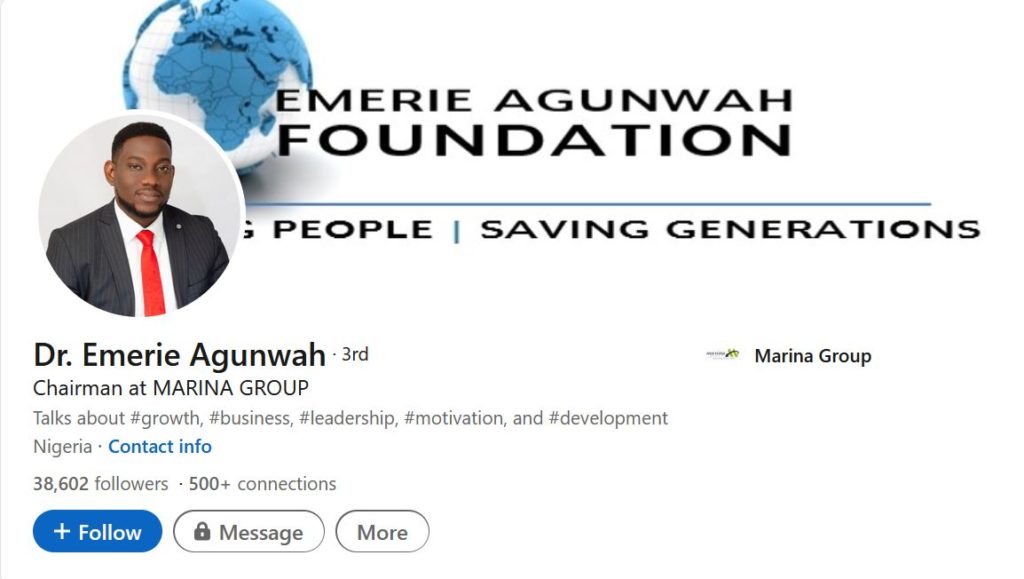
Another less visible equity indicator was who owned large businesses like malls and the grocery stores in them. I asked who owned Accra’s Marina Mall and Kumasi City Mall. An Uber driver told me what I was expecting to hear: Marina Mall’s owners weren’t Black Ghanaians. In fact, he said they weren’t Ghanaian at all, they were Lebanese. However, a little of bit of Googling led to a surprise: the mall is actually owned by the Nigerian-based Marina Group whose chairman is Dr. Amerie Agunwah below.

I failed to definitely confirm the owners of Kumasi City Mall except that it’s owned by Delico Kumasi Limited which is subsidiary buried under other subsidiaries that include AttAfrica, Mauritius that’s led by two white dudes, Renier Vans Rensburg and Wynand Baard.

The main grocery store in both malls is Shoprite, a large chain throughout Africa whose majority owner is South African billionaire, Christo Wiese.

Not all the oil companies are foreign-owned like Kosmos. We also saw many GOIL gas stations. According to Wikipedia, GOIL, the Ghana Oil Company, “is a state-owned Ghanaian oil and gas marketing company, formed on 14 June 1960. Currently it holds the place of Ghana’s top oil marketing company, and is the only indigenous owned petroleum marketing company in Ghana.”

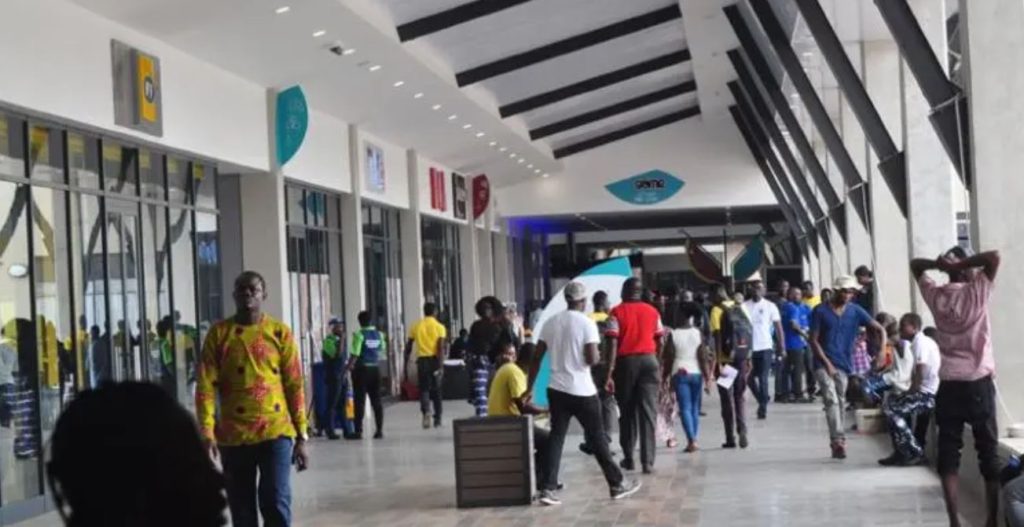
The air conditioned malls packed with tech stores, seemed a world away from the many people selling along the roads that lead to them…

Kumasi City Mall
Kumasi street market life…

Some of those wanting to #FixTheCounty would perhaps see the malls as example of what’s wrong. However, according to one Uber driver with whom I had a wide ranging conversation, not everybody even cared about fixing the country. He said many Ghanaians, including most young kids, dream of leaving it to go to the U.S.. This is partly because the idealized myth of America the Great seemed alive and well in Accra and Kumasi.

My chat with the Uber driver, who said his name was Bismarck, started after I asked him why he had an American flag next to his Ghanaian one on his dash. He said it was because he loved America, especially their technology. Interestingly, the technology he mentioned was their military. Later in our chat, he said, “But they have one problem. They hate Black people. They only like Black people when they need them.” (Another Uber driver I spoke to expressed similar love for Canada which I suggested he might want to temper given Canada’s role in the violent coup that deposed Ghana’s democratically elected president Kwame Nkrumah in 1966.)

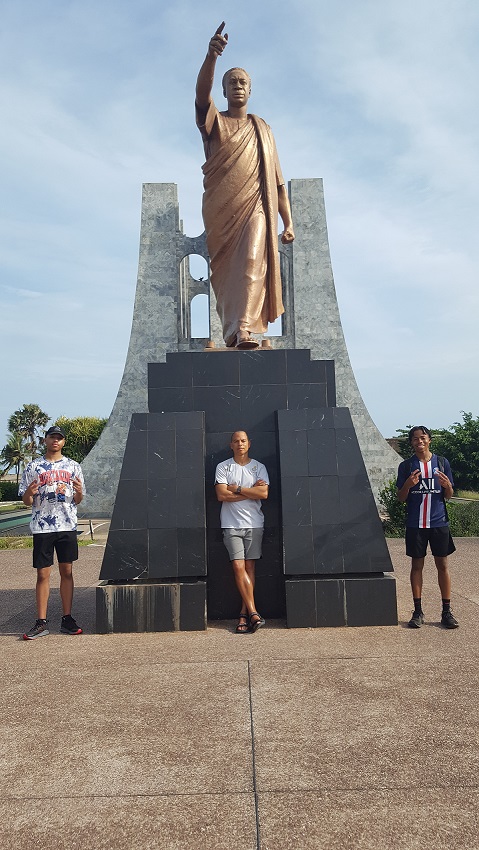
When I mentioned to a fellow Canadian Blacktivist the love for America and Canada some Ghanaians had expressed, his response was essentially, “Of course they love the places that have lots of good stuff built from stolen wealth.” As my boys and I paid our respect at the feet (literally) of the grandfather of all uppity negroes, Kwame Nkrumah, I wondered what he’d think of the state of the country he helped lead to independence.

One last point before I wrap up….We saw very few white people in Ghana. The most was 3 or 4 together, all men, at the Ghana Premier League football game we attended, sitting in the most expensive section and on the Africa World Airways flight to Kumasi. (Children seemed to confirm the rare sightings of white folks by happily yelling “Oboroni!”, the Fante word for white person, at me on my morning walks as I happily waved back to their great amusement.)

I left Ghana with a better appreciation of the challenges facing Blacktivists in the diaspora and on the continent in working together to regain control of the vast resources in the ground, and in the people, of the continent. Given how the global pandemic has redefined what’s normal, young Blacktivists working with older folks who are committed to fundamental change – and have a long view of how to make it – have the opportunity to make Africa a global economic powerhouse that shares its wealth with all people.

Categories
Chappelle Free speech transgender

Dave Chappelle’s latest TRANSgression

Unless you’ve been living under a rock (or somewhere with really bad wifi) for the last three weeks you probably heard something about the controversy around comedian Dave Chappelle’s latest special The Closer, released Oct. 5 on Netflix.

Full disclosure that I’ve been a huge Chappelle fan ever since seeing him live at Montreal’s Just for Laughs festival in the late ’80s when he was in his teens. I immediately loved his mix of comedy and racial commentary that remains a hallmark of his act today.

The controversy around The Closer is focused on what Chappelle says about gay and trans people. This isn’t new. In fact, at the beginning of The Closer Chappelle says he’s going to address the controversy from his remarks about trans folks in his previous specials.

The main critiques of The Closer I’ll address here are:

  1. He talks as if all gay people are white, almost completely ignoring Black gay and trans people. 
  2. He’s transphobic.
  3. His comments could could cause harm to the transgender community.
  4. He’s “punching down” on the trans community.

Regarding the first point, an Oct. 15 Vulture article said, “These intersections are blind spots for Dave. He speaks about Black and queer struggles as if they are strictly in competition, not always entangled.” An Oct. 23 Vox article says, “Chappelle rarely acknowledges that these communities contain people of colour; instead, he frames the concerns of queer and genderqueer people — especially the linguistic arguments about pronouns, anatomy, and bodily functions that often arise from conversations about trans and nonbinary identity — as solely a product of white progressive hysteria gone mad.” The overall point is mostly valid (except the “hysteria gone mad” part as Chappelle says nothing of the sort). The only time I remember Chappelle directly acknowledging the existence of Black gay/trans folks in The Closer was in one bit about a gay white guy – with whom Chappelle had an argument in a restaurant – calling the cops on him. Chappelle says a gay Black man would never do that because he knows the cops would show up asking, “Which one of you n%$#*s is Clifford?”. He also indirectly acknowledges the existence of gay Black folks when he tells the story of Sojourner Truth to highlight racism within the feminist movement and, by inference, the gay/trans movement. However, for most of his special Chappelle seems to see gay/trans folks as all white and contrast their experience against Black folks who he seems to see as all straight.

Regarding the second claim, as none of the folks calling Chappelle transphobic that I read about gave their definition of transphobic, I’m going with Google’s: “having or showing a dislike of or prejudice against transsexual or transgender people.” By this definition, the accusation isn’t valid. Chappelle goes out of his way to explain he has no issues with trans folks as a group, either for their transness or anything else. He clearly critiques the actions of white trans and gay folks saying, “Gay people are minorities — until they have to be white again.”, just after telling the story of the gay guy who called the cops.

The third point, that Chappelle’s comments could could cause harm to the transgender community, seems to imply that they could make people physically assault trans people. One problem with this critique is that it’s impossible to prove unless someone beat up or killed a trans person and said they did it because of Chappelle’s specials. That Chappelle has been making trans jokes literally for years and this hasn’t happened further weakens this point. But what weakens it most are those who accuse Chappelle of hate speech.

In Canada, it’s a Criminal Code offence to, “wilfully promote hatred against any identifiable group, by making statements.” The maximum penalty is imprisonment of not more than two years. But, as Chappelle is American, he’s bound by American hate speech laws. The problem is, there aren’t any. According to Wikipedia, “The United States does not have hate speech laws, since the U.S. Supreme Court has repeatedly ruled that laws criminalizing hate speech violate the guarantee to freedom of speech contained in the First Amendment to the U.S. Constitution.” So Chappelle has the legal right to say whatever he wants. Despite that, there are some things I wish he hadn’t said which I cover later.

So, there’s what people say he did wrong – and what they think should happen.

Several places, including an Oct. 6 Variety article, reported that the National Black Justice Coalition, a civil rights advocacy group serving the LGBTQ+ community, issued a statement, urging Netflix to remove The Closer, saying, “With 2021 on track to be the deadliest year on record for transgender people in the United States — the majority of whom are Black transgender people — Netflix should know better. Perpetuating transphobia perpetuates violence. Netflix should immediately pull ‘The Closer’ from its platform and directly apologize to the transgender community.” (Interestingly, I couldn’t find any mention of the statement, Dave Chappelle or The Closer on the NBJC website.) It appears the folks at the NBJC aren’t familiar with either the existence of the First Amendment or the lack of hate speech laws in the U.S. Even by Canadian law, Chappelle would still be safe as he in no way wilfully promotes hatred against gay and trans people. Perhaps the NBJC should focus on getting hate speech laws passed in the U.S.

Chappelle did tell an apparently true story about beating up a lesbian – but not because she was a lesbian. He said he beat her up because she swung at him first. The fact that he didn’t end the story by encouraging others to go beat up lesbians means he didn’t break Canadian hate speech laws. But that’s not the issue. The issue is Chappelle shouldn’t be beating up women, any women, and shouldn’t be making such beatings part of his show. At the very least, I would have liked Chappelle to recognize that his power, combined with how fanatical fans and others can be in the U.S., could lead to someone following his lead and, to avoid that, telling the audience he doesn’t condone beating up any women. Or, better yet, he could have just left that story out. 

Two other things Chappelle says caused the most outrage. He said he was “team TERF” and that “gender is a fact.” TERF stands for Trans-Exclusionary Radical Feminist a term that, according to Wikipedia, “originally applied to the minority of feminists espousing sentiments that other feminists considered transphobic, such as the rejection of the assertion that trans women are women, the exclusion of trans women from women’s spaces, and opposition to transgender rights legislation. The meaning has since expanded to refer more broadly to people with trans-exclusionary views who may have no involvement with radical feminism.” 

The unfortunate thing is that what Chappelle says immediately after clarifies that he only believes in one TERF idea – that trans women’s vaginas can’t produce children. Based on that, it appears he actually means sex, not gender, is a fact. Now, given comedians like Chappelle choose every word very carefully, one must wonder why he’d open himself up to even more criticism than expected by apparently choosing to communicate some of the most controversial ideas so confusingly.  

Critics also slammed Chappelle for trying to make victims out of people like comedian Kevin Hart and rapper DaBaby. Hart got fired from hosting the 2019 Oscars after old tweets of his surfaced and were labelled homophobic. DaBaby was dropped from several show lineups after complaints about an anti-gay rant he went on at a July 25, 2021 show. Chappelle laments Hart losing the Oscars after wanting to host them all his life – seemingly asking the no doubt largely middle class audience to empathize with millionaire Hart’s lost dream (which will likely just be delayed anyway). 

What the Hart bit touches on, however, is the last and most important critique of The Closer: that he’s “punching down” on trans people. Punching down means critiquing groups who supposedly have less power than yours, which raises one of the most interesting question The Closer explores: which group has more power, rich Black men or white gay/trans people?

One part of the answer is that rich Black men don’t have any power as a group. There is no National Association of Wealthy Brothers like there is the National Centre for Transgender Equality or the Gay and Lesbian Alliance Against Defamation (GLAAD). Rich Black men have power individually but none as a group. Also, a key reason some gay and trans organizations have power is because many of their members are white, whereas, clearly, no rich Black guys are.

This is why one of Chappelle’s main goals in The Closer is highlighting racism in the gay/trans community. This is real as we saw in Canada when Black Lives Matter Toronto took over Toronto’s 2016 Pride parade. CBC quoted BLM-TO co-founder Alexandra Williams saying they held the sit-in because they wanted to hold Pride Toronto accountable for what she called “anti-blackness.” 

Just as there has been relatively little attention paid to Chappelle’s critique of white gay racism, there has been absolutely none paid to one glaring omission in The Closer. In all the critiques I read, no one seemed to notice that Chappelle criticizes the #metoo movement for being focused on white women and superficial actions – without ever mentioning it was started by a Black woman  – Tarana Burke.

Reading all the attacks on Chappelle – some justified, many not – leads me to offer these guidelines for critics and artists:

Critics: before you critique anything, please read or watch the entire thing.

Artists: in this day and age, please realize – and take responsibility for the fact that – most people often don’t read or view the entire thing. 

Finally, in the spirit of consistency, and on the question of punching up or down, I ask those going after Chappelle for incitement, this question: are you also going after Facebook’s Mark Zuckerberg? Or are you too uninformed – or too afraid – to punch up?

Categories
marketing Sports

Emancipate yourself from mental slavery: stop caring about pro sports

The title of this post is based on the great line from Bob Marley’s 1980 classic, Redemption Song, “Emancipate yourselves from mental slavery. None but ourselves can free our minds.”

According to the Wikipedia article on the song, Marley took these lines from a speech Marcus Garvey gave at Menelik Hall in Sydney, Nova Scotia, during October 1937 and published in his magazine, The Black Man:

“We are going to emancipate ourselves from mental slavery because whilst others might free the body, none but ourselves can free the mind. Mind is your only ruler, sovereign. The man who is not able to develop and use his mind is bound to be the slave of the other man who uses his mind.”

The minds behind the pro sports marketing machine have made slaves of millions of intelligent people. But they haven’t done it by forcing people to stop developing or using their minds. They’ve done it, and continue to do it, in ways that train people to think certain ways about certain things – and not to think about certain other things at all.

The Machine gets millions of people to care (many of them deeply for years) about whether millionaires playing for billionaires win games and titles. The Machine does this by training fans to do a number of key things:

  1. Cheer for the “home” team, meaning the team representing the city or country they live in;
  2. See the athletes as people very much like them who care about their communities; and
  3. Never think about team owners, who are almost all billionaires.

As most fans appear to do the first two things without ever thinking twice about why, let’s take a closer look at them…

It makes perfect sense why we cheer for amateur home teams like our kids’ teams. But very few of our kids have ever played for professional teams so why do we cheer on professional “home” teams? Some people would argue that’s just as natural as cheering for our kids’ teams. It’s not…

We cheer our kids’ (or nephews’ or nieces’) teams because we know and love our kids and want them to succeed. Part of this is because their success is literally a reflection on us because so much of who they are and what they do is due to us. This isn’t at all the case with pro teams and athletes. The only influence fans have on pro athletes performance is how loud they yell in the stands – and we all know that has mixed results. So why are so many people more emotionally invested in pro athletes’ victories than some parents are in their own kids’ wins? Because they’ve been trained to be.

Why should we cheer for a pro team simply because we live in the same city or country – especially when many of the athletes aren’t from there? Most people don’t know the names of most of the players on the pro teams they cheer for let alone anything about them beyond how well they they play. So if we don’t actually know (or therefore care) about the individual players, then what exactly are we cheering for?

In his 2012 article in Maryland’s Capital Gazette, Psychology: Rooting for your favorite team is good for you, Scott Smith offers some insights. Smith says research has shown that people root for a sports team for many different reasons including being socialized into it by family and friends or simply liking or identifying with the name of the team, the color or style of their uniform, or their winning ways. He also says:

“It was long theorized that those who avidly root for sports teams are lonely, alienated people who suffer from low self-esteem and have no real social ties to meet their emotional needs. Research, however, is showing that just the opposite is true. A study at the University of Kansas found that sports fans are happier and actually suffer fewer bouts of depression and report lower levels of alienation than people who are not interested in sports. In fact, most sports fans are high functioning, well educated and successful people – how else could they even afford a ticket at today’s prices!” (Smith doesn’t include the links to the University of Kansas study.) So Smith offers some ideas why people cheer for teams and some evidence that doing so has some benefits.

Neither Smith nor any of the articles I found online mentioned sports marketing as something that might influence why people cheer for their home team, or any team. It seems sports marketing is so effective that everyone has joined their home team. Even NPR (National Public Radio), that doesn’t shy away from uncomfortable topics, only had articles talking mostly about how sports marketing works – but not critiquing it. The first NPR item that came up when I Googled “NPR “sports marketing” was NPR’s The Business Side podcast, “Sports Marketing pioneer Jim Host & The Birth Of ‘The Bundle'”.

This lack of articles is a pretty big omission considering pro sports are billion dollar industries with corresponding marketing budgets.

In addition to training us to cheer for a home team full of millionaires we know nothing about, the Machine also trains us to see those millionaires as just normal folk who care about “their” communities and to rarely, if ever, think about their billionaire owners.

We see heart warming media stories about athletes visiting children in hospital and many of these athletes are no doubt sincere in their concern for the kids. However, what we almost never see or hear is athletes doing anything about or commenting on any social issue in the community – unless the issue has first gained popular support. For example, some athletes, like NHL star Sidney Crosby, joined millions of others in condemning racial injustice following George Floyd’s murder. However, most of the time, most athletes keep their heads down and their mouths shut. Is that what someone who really cares about their community does?

Now, it’s not hard to imagine why athletes stay silent when they see what happens to people like NFL quarterback Colin Kaepernick when they speak out – or take a knee. Kaepernick played six seasons for the NFL’s San Francisco 49ers. In 2016, he knelt during the national anthem at the start of NFL games in protest of police brutality and racial inequality in the United States – and never played in the NFL again. In November 2017, he filed a grievance against the NFL and its owners, accusing them of colluding to keep him out of the league. Kaepernick withdrew the grievance in February 2019 after reaching a confidential settlement with the NFL.

So athletes, even if they wanted to speak out, are forced into silence and inaction with threats of dismissal. So, in the absence of hearing from the athletes themselves, the Machine is able to sell us an image of them as just hard-working guys who take time from their busy schedule to visit sick kids (and it’s all guys because I’m referring to the Machine behind the NHL, NFL, NBA and MLB).

And while the Machine has us thinking the athletes are just great guys very much like us (well, except the exceptional athletic ability part) – it trains us to never think about the billionaires who own the teams for which the athletes we love play.

So what do we know about these folks who we help make boatloads of cash?

Well, one thing that shouldn’t be surprising is that, to become, and stay, billionaires, they do whatever they can to lower their taxes. In fact, according to a July 2021 ProPublica article, The Billionaire Playbook: How Sports Owners Use Their Teams to Avoid Millions in Taxes, billionaire owners like NBA Los Angeles Clippers owner and former Microsoft executive Steve Balmer, legally use tax laws to pay lower tax rates than players and even stadium workers. Does it being legal make it right?

One way owners use all those tax savings is donating to political parties. According to an Oct. 2020 ESPN article, American professional sports owners contributed nearly $47 million in U.S. federal elections since 2015, including $10 million to Republican causes and $1.9 million to Democratic causes by the time the article was posted in October in the run up to the Nov. 2020 election. That strong Republican lean is consistent with owners’ spending in the 2018 and 2016 federal elections as well. ESPN’s research on principal owners, controlling owners, co-owners and commissioners from the NBA, NFL, NHL, WNBA, MLB and NASCAR revealed they donated $34.2 million (72.9%) to Republican campaigns or super PACs purely supporting Republican causes, compared to $10.1 million (21.5%) to Democrats over the past three elections. The research includes more than 160 owners and commissioners spanning 125 teams.

So the next time you think about buying that ticket to see that big game in person or you catch a game on TV munching away through the really expensive ads, remember who’s pockets you’ve helping fill…and remember Bob Marley’s words.

Note: One week after posting this I got an email from LeadNow asking Canadians to sign a petition to STOP RICH TAX CHEATS. CLOSE TAX LOOPHOLES. The petition followed the release of the Pandora Papers which revealed that at least 500 wealthy Canadians have been hiding money and dodging taxes in offshore tax-havens.

Categories
Elections Politics

Why minority governments are better for Black Canadians

Federal election polls currently predict a minority Liberal or Conservative government on Sept. 20 and that’s good for Black Canadians as minority governments have a history of delivering things that have been – and in many cases still are – good for Black folks. Here are some, paraphrased from a great 2019 Policy Options article by Geoff Norquay.

The Lester B. Pearson minorities (1963-65 and 1965-68)

“Supported by the NDP, Pearson’s Liberals put in place a bounty of progressive programs and initiatives, including universal coverage of hospitalization and medicare, the Canada and Quebec Pension Plans, the Canada Assistance Plan, the Canada Student Loans program…and groundbreaking labour legislation that pioneered the 40-hour work week.” As many Black Canadians face economic challenges partly due to systemic anti-Black racism, they needed programs like Medicare and the Canada Student Loans Program more than others. As part of the economic challenge was being in low paid jobs with few protections, the 40-hour work week also benefited them more.

The Pierre Elliot Trudeau minority (1972-74)

“The Trudeau government amended the Elections Act to regulate election expenses for the first time. This was landmark legislation that established most of the principles still at the heart of Canada’s party financing regulatory regime: a tax credit system for donations, disclosure of donations over $100 and reimbursement for political parties’ election expenses. Limits were also placed on the amounts that candidates and parties were allowed to spend on campaigns.” As these changes curbed the power of big business to influence elections, it helped Black folks because big business then, as now, isn’t controlled by Black folks. The problem now, is that Big Tech businesses make money by allowing disinformation that affects elections in ways that haven’t benefited Black folks.

The Joe Clark minority (1979-80)

“Despite its short time in power, the Clark government can claim at least partial credit for one significant policy advance, Canada’s first access-to-information legislation. Clark’s Bill C-15, to create the Freedom of Information Act, established a broad right of access to government records.” Under the Access to Information Act and the Privacy Act, the right to submit Access to Information and Privacy requests, or ATIPs, is one of the most powerful tools Black folks have to confront discrimination they face from the federal government or federally regulated workplaces. That’s because documenting discriminatory treatment is essential to ending it. Information requests only cost $5 and privacy requests (i.e. information dealing personally with you) are free. Provinces have their own versions. Black folks in Ontario can use the province’s Freedom of Information and Protection of Privacy Act to get information from the Ontario government or places it regulates. Regulated organizations include the Canadian and Ontario human rights commissions.

The Paul Martin minority (2004-06)

“Early in the Martin government, the Prime Minister reached a 10-year deal with the provinces and territories to increase federal health care funding by $41 billion, to lower their cost pressures and reduce wait times for essential services. The federal commitment included a 6-percent annual increase in federal transfers. A divisive and years-long debate was concluded with the legalization of same-sex marriage in 2005.” Any improvement to healthcare disproportionately benefits Black folks because many Black folks have health issues related to the economic challenges flowing from systemic anti-Black racism. Legalizing same sex marriage directly benefited Black LQBTQ2+ folks – which was particularly important since homophobia was, and still is, an issue in Black communities as in the larger society.  

The Stephen Harper minorities (2006-08 and 2008-11)

“When the government’s 2008 fall economic update failed to announce stimulus measures in the face of the rapidly developing world credit crisis and recession, the opposition leaders threatened to topple the government. The Liberals and the NDP proposed a coalition government supported by the Bloc Québécois. After several days of crisis, Harper secured a highly controversial prorogation [pause] from the Governor General. A notable Harper accomplishment was his eventual response to the…financial crisis. Chastened by their recent near-death experience at the hands of the opposition and forced to play against their conservative fiscal instincts, Harper and his finance minister, Jim Flaherty, [included in the 2009 budget] $40 billion in stimulus and $20 billion in personal income tax cuts…taking the country sharply into deficit. The government’s aggressive response enabled the Canadian economy to recover more quickly and come out of the recession stronger than other G7 countries. 

At the 2010 G8 Summit hosted by Canada, the Conservatives launched a signature commitment to the summit’s initiative on maternal, newborn and child health (MNCH). Starting with a leadership pledge of $2.85 billion for 2010-15, the government followed up with an additional $3.5-billion commitment for 2015-20.” Just as with the COVID pandemic, Black folks were disproportionately negatively impacted by the global financial crisis so they would have benefited more than many from these measures to address it. Improvements to maternal health would also disproportionately help Black women since the U.S. Center for Disease Control and Prevention (CDC) reported that, in pre-pandemic times, Black women in the U.S. died of pregnancy-related causes at a rate three times higher than white women, and Black babies were twice as likely to die before reaching their first birthday than white babies, regardless of the mother’s income or education level. According to a 2020 Huffington Post article by Eternity E Martis, because Canada doesn’t collect race-based health data, we don’t have an accurate picture of Black maternal mortality in this country. The Liberal government’s 2021 budget included almost $200 million over five years for Statistics Canada to collect data on “diverse populations, and support the government’s, and society’s, efforts to address systemic racism, gender gaps.” It’s crucial that include health data.

Minority governments, both Liberal and Conservative, have delivered lots of good stuff for Black Canadians and can be expected to continue doing so. Majority government have delivered some good things too like the 1977 Canadian Human Rights Act and the 1982 Canadian Charter of Rights and Freedoms, both enacted by Pierre Trudeau majorities, but minority governments have delivered much more according to my (limited) research.

So Black folks need to discard the idea that voting for a candidate of a party that has little chance of gaining power is a “wasted vote” because, in a minority government, that party could end up holding the balance of power. Black folks can then push all parties to deliver the goods with a higher chance of success.